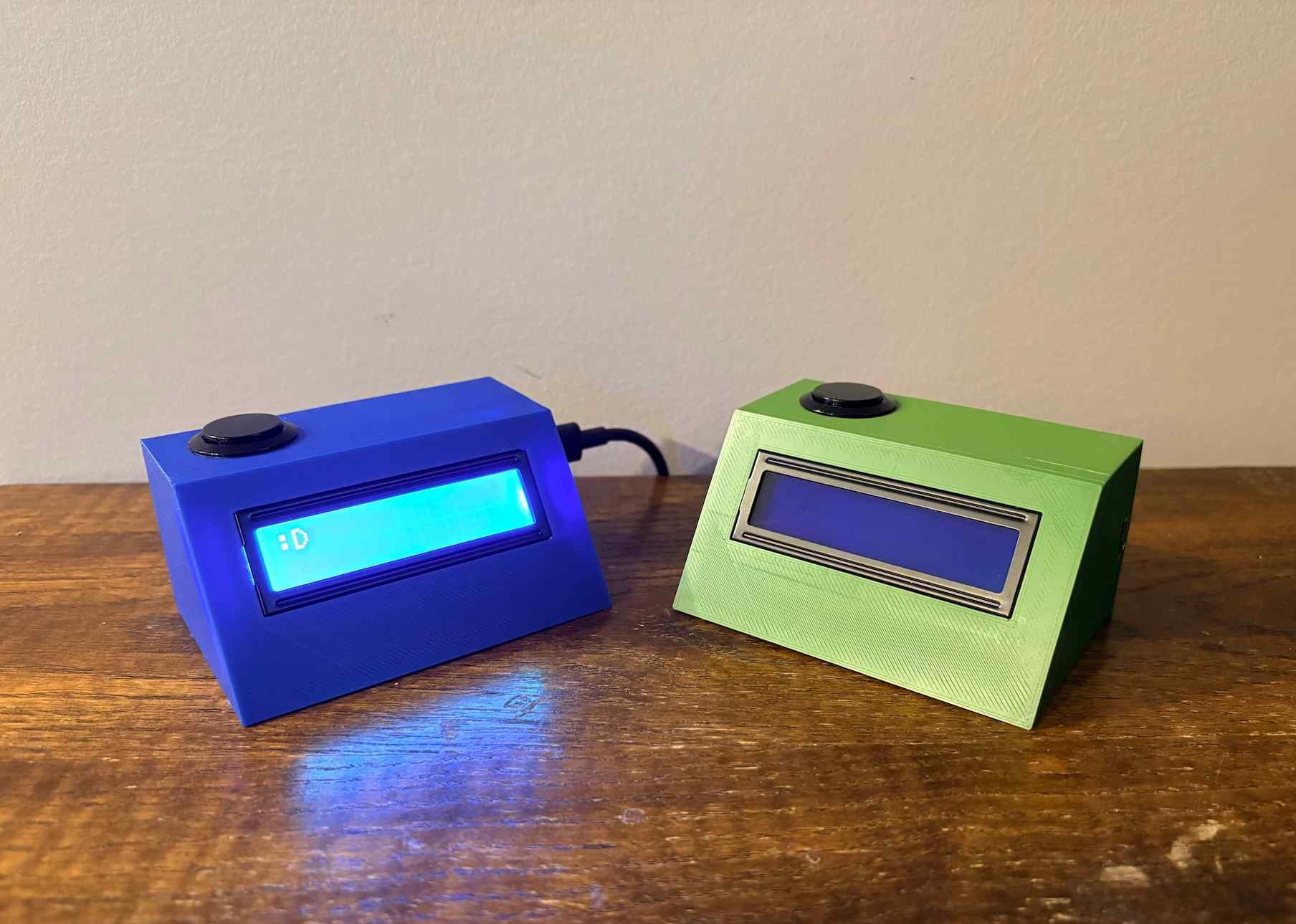
As helpful as instant messaging platforms are, they have created an expectation of 24/7 availability. For most use cases thats perfectly fine, but Ive recently come to want an option that doesnt make that demand.
The idea here was to build a standalone device that simply displays the most recent message sent to it, like a remotely modified stickynote. As a physical object, the message waits patiently until the recipient is ready to respond, and is simultaneously incredibly hard to miss.
Hardware
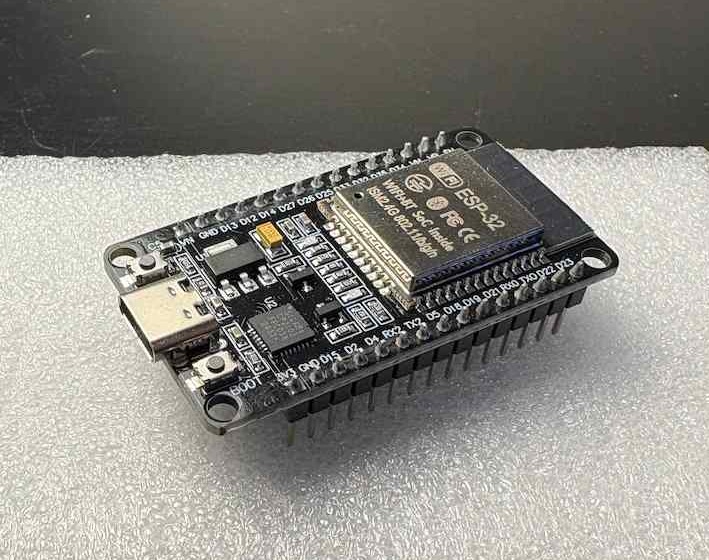
For the board, I used the ESP32, which handles network authentication/connection. Its powered over a 5V USB-C, and will pass any new messages to an I2C 1602 LCD.
I also included a button to toggle the display light, since I plan to turn the display light on and off in software so the device lights up when a new message arrives.
Firmware
The firmware here is very simple, all it does is connect over a websocket using a secret on the device, and once connected listens for new messages. When a new message is received, the device confirms its been received so the message can be deleted on the server, and that message is pushed to the LCD.
The LCD can be toggled on and off with the button, and is forced on when a new message is received. This very simple behaviour makes it clear when a new message arrives, since you can "dismiss" messages as you read them.
The firmware could just as easily send a read receipt to the server, but that would be counter to the point now wouldnt it?
Housing
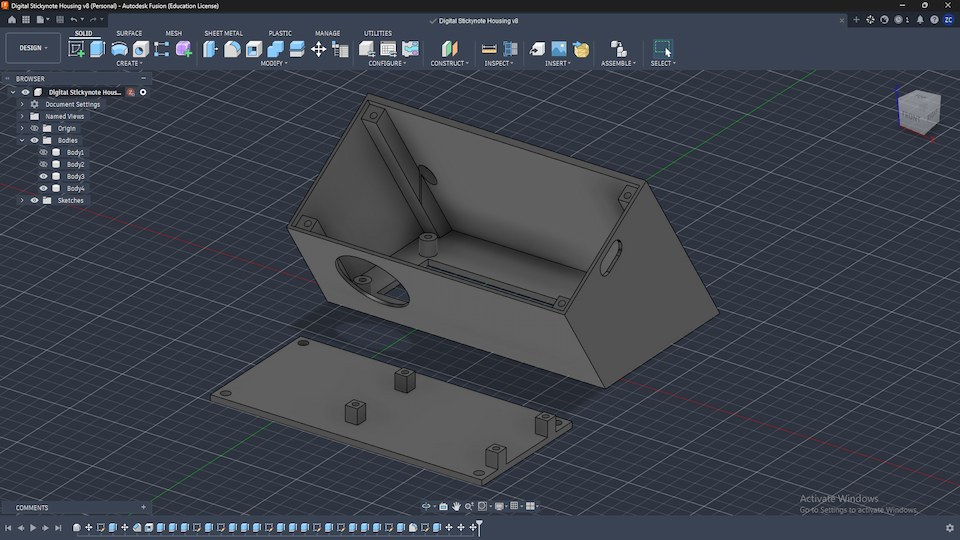
I found this LoRa node enclosure which was nearly what I was looking for, and rebuilt it to fit the parts I had on hand. My version is deeper to include a hole for the button in place of the antenna, and is designed with the hole for the USB port such that the ESP32 is mounted upside down, which gives enough room for soldered pin headers.
You can download the files directly here:
Prototyping
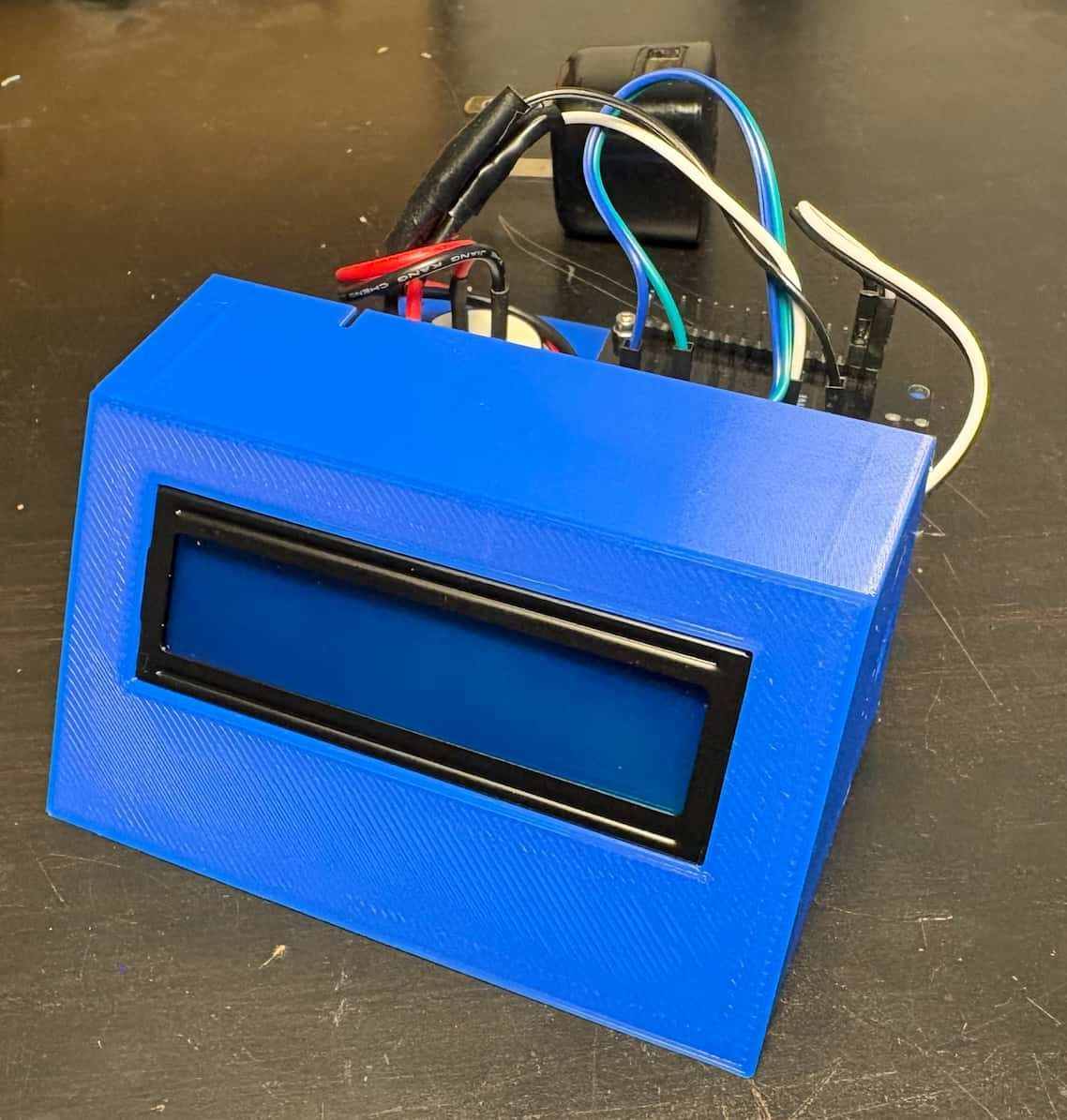
Before creating the final housing in CAD, I printed the unmodified version of the housing to test the fit of the LCD and make sure I could mount the ESP32 properly. The prototype made it clear the original case wasnt going to work, and allowed me to figure out exactly how much more space I would need.
In testing on reasonably strong wifi, the device spent roughly 15% of its time making web requests and the remaining 85% polling for a button press.
With WiFi connected, the ESP32 draws around 45mA while polling and around 180mA during a request, averaging to about 65mA. The backlight adds ~20mA, and the LCD IC2 logic lists as <2mA.
At 5V, this is only around 0.34-0.44W, depending on if the backlight is on!
Sending Messages
The last part of this chain is to give users some way to pass messages to the server. This can be done in infinitely many ways, but for our use case, I opted to host a Discord bot.
When a message is sent to the bot, it reads the senders unique user ID, and if that ID is part of the whitelist, forwards their message using a rotating secret to the associated endpoint on the server.
The fun part about this option is that its available on all platforms, and still allows messages to be entirely ephemeral. After the bot sends a message to the webserver, its deleted from the Discord chat history by the bot, and once the server passes the message to the correct device, the message is also deleted from the server. This means the message is never stored anywhere other than on the physical display.*
Assembly
For the final product, I opted to leave things connected with jumper wires rather than solder directly, so the parts can be easily swapped / reused if needed. The device will live on a shelf or desk in relative safety, so Im not very concerned with a connection coming loose.
Assembly was pretty straightforward, I ended up making two units, with the firmware and webserver able to support up to eight in future. Though by design, currently each device has exactly one owner who can send messages to it, so as a product this version does not scale well.
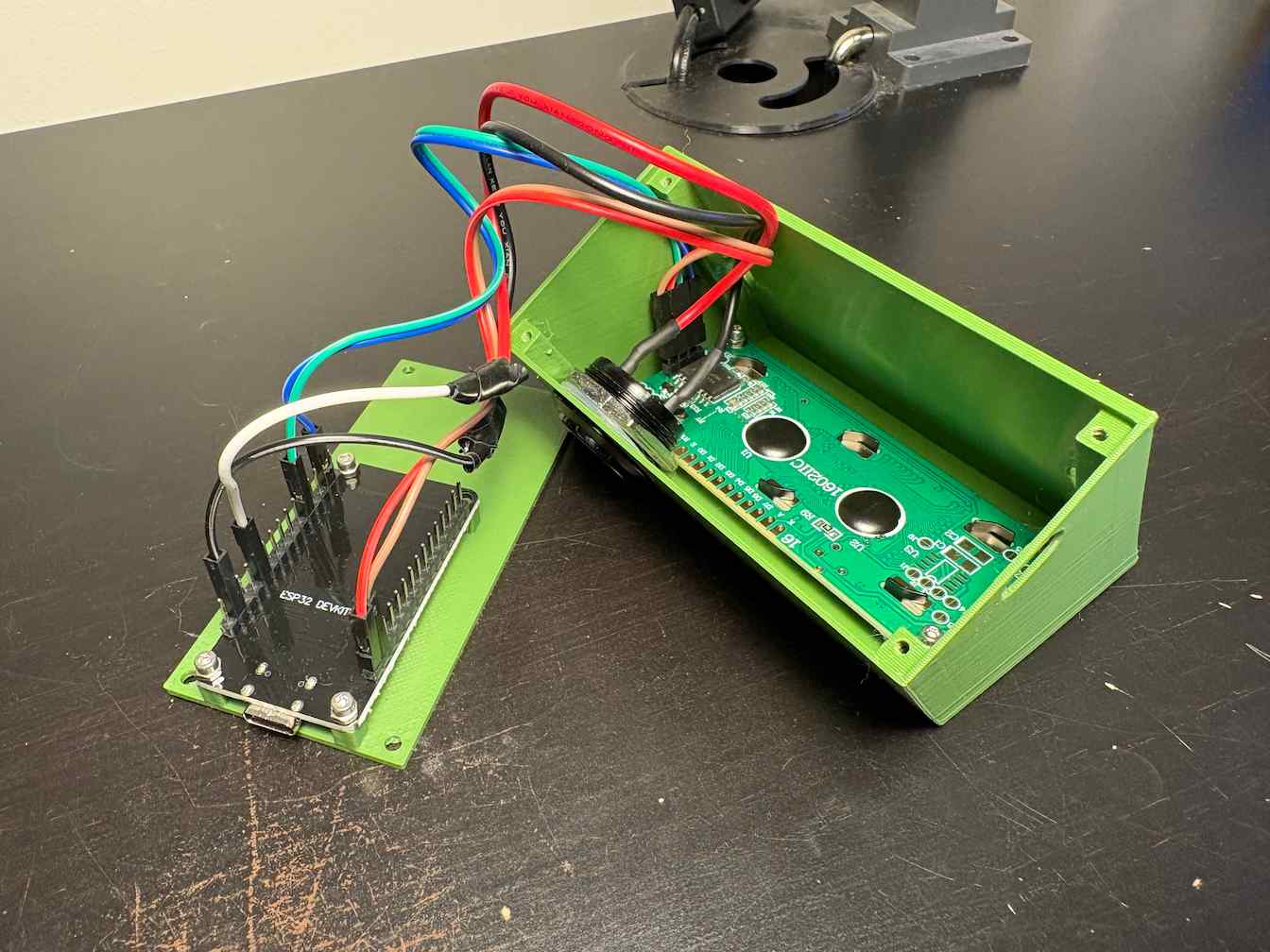
All it took from here to set them up was uploading credentials for whatever wifi network they will operate on, assigning a Discord user to each, and plugging them in!
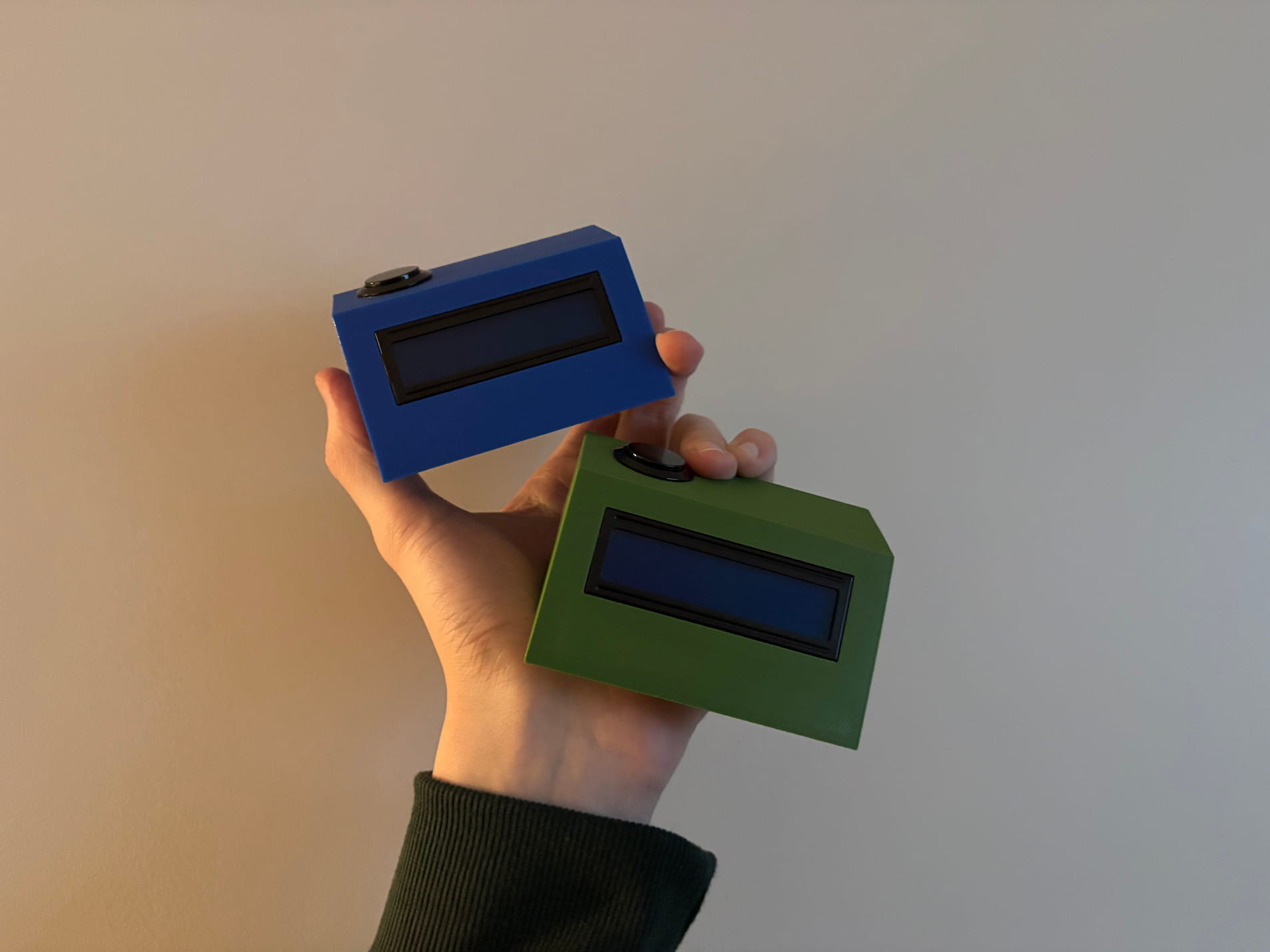
And with that, the project was done!
From here I think a fun direction would be to give the devices a bigger screen that can support potentially four to six messages from different people, so you could create a network of them within your friend group! That would mean redesigning a lot of the system though, so for now Im happy sticking with the pair :)
Verdict
I was worried that the stickynotes wouldnt be practical, but since making them they have seen a shocking amount of use. Even after three months of use, messages are still sent through each at least once a day!
I think overall they are excellent for what they are, and they will hopefully see use for years to come.